C40 Cities Students Reinventing Cities
The Ove Arup Foundation and C40 Cities have announced the results of the Youth Vision for Green & Thriving Neighbourhoods Challenge, a global initiative to highlight how youth creativity and leadership can shape the sustainable cities of tomorrow.
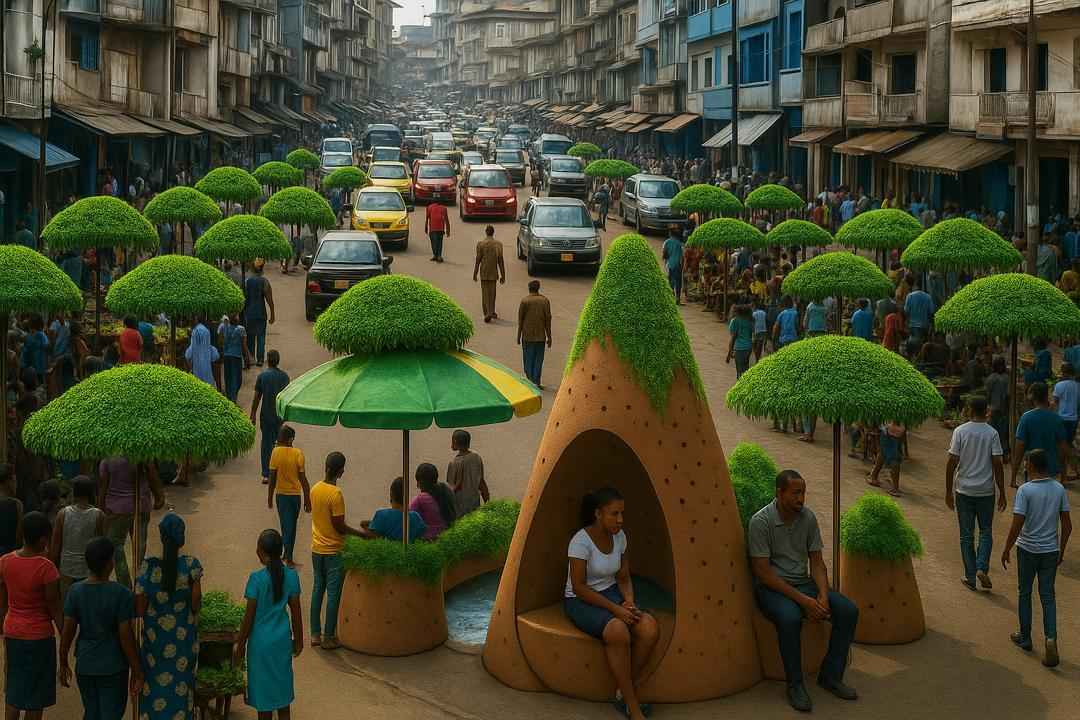
Young people from around the world shared bold ideas for greener, more inclusive, and climate-resilient cities, from ‘edible landscapes’ to ‘green umbrellas’.
The quality was such that four winning projects were highlighted, and a further six were recognised for their imagination and impact, reflecting the optimism of a new generation of urban thinkers.
Winning Projects

"The most valuable thing I learned is that architecture must serve people and adapt to their spatial needs and unique ways of inhabiting space. It must help restore what we have taken and guide us toward an ecological restoration process."
Doménica Albornoz
Project: Resilient Edges
Student: Doménica Albornoz – Quito, Ecuador
Domenica proposes reintegrating urban edges in Quito, Ecuador. The project aims to address the uncontrolled urban expansion through ecological restoration, productive landscapes, and improved connectivity.
Edible City
Student: Bosco Choi – London, United Kingdom
Bosco proposes to imagine a future in which communities, landscape and agricultural professionals come together to plant edible landscapes across cities and towns, in parks, streets, gardens, and allow the grown food to be freely picked by anyone.

"The Challenge provided a fantastic opportunity to test out my idea of upscaling the concept of Edible Cities. It gave me a chance to improve my observation and reading of the built environment around me, and to unleash my creativity for innovative solutions. Of course, it would be fantastic to see city governments exploring the potential of Edible Cities!"
Bosco Choi

"I was drawn to this competition for the opportunity to apply academic concepts in a creative setting. With the brief being grounded in local neighbourhoods, I found myself naturally re-examining everyday landscapes for the hidden histories, challenges, and possibilities they contain."
Isobel Heintzman
Parkdale – Bridging the Gap
Student: Isobel Heintzman – Toronto, Canada
Isobel’s proposal is centred on Toronto's Parkdale neighbourhood, incorporating the four principles of green & thriving cities to restore a waterfront connection served by highway development. The design imagines a new, more accessible bridge–itself a green space–linking the neighbourhood to the lakeshore, with a variety of plan features that prioritize environmental sustainability alongside local economic development, cultural vibrancy, and social equity.
Green Umbrellas & Cooling Cones
Student: Lucyann John – Freetown, Sierra Leone
Transforming market spaces into cooler, greener, and more inclusive areas through planted canopies and shaded public structures.

"I joined this challenge because I’ve always believed that even the smallest ideas can heal the biggest problems just like nature does. My idea brings green life and coolness into places where nature feels forgotten, turning ordinary streets into living, breathing spaces. Being selected as a winner means so much, it is a reminder to my city and myself that even one small move, born from love and effort, can transform the way we live."
Lucyann John
Honourable mentions...
The six other projects that received recognition were:
Thriving Through Narrativity
Student: Sanam Mirzaye-Ahmadi – Torbat-e Jam, Iran
Viewing neighbourhoods as living stories that connect people, place, and identity through inclusive, narrative-based urban planning.
"Walking around the city, I always imagine how it could become a better place. This challenge helped me bring that vision to life. I learned that a neighbourhood’s character reveals itself in its memories, spaces, acts, and voices. Being recognized inspires me to make this vision real."
Spacescaping
Student: Berk Koşar – Rome, Italy
Berk proposed Spacescaping as a living framework where our ideal, digital, and physical spaces co-evolve through interactions and the collective knowledge we gain from one another — nurturing a shared vision of greener and more thriving neighbourhoods.
"Being part of the C40 global network is a meaningful opportunity to envision and shape the future together. Having my proposal recognised encourages me to keep expanding this vision, to keep learning, and to stay curious.”
Calderón Proposal
Student: Mishell Villalba Jácome – Quito, Ecuador
Revitalising a historic neighbourhood through sustainable, inclusive design and community-led regeneration.
“My participation in the Youth Vision for Green & Thriving Neighbourhoods challenge was inspired by a strong belief in transforming ideas into real instruments of change. Through this project, I sought to propose a solution that not only responds to the climate crisis but also enhances community well-being, fostering more inclusive, green, and participatory urban environments.”
The Green Algorithm
Merna Moataz Gamal Abdelhamid – Cairo, Egypt
Through "The Green Algorithm", Merna proposed reimagining how we can preserve existing ecosystems while creating spaces where communities naturally come together as my core design principle was leaving the old trees standing exactly as they are. She envisions this as a community hub, where every gathering strengthens both social bonds and our connection to nature.
"Growing up, I witnessed how urban development often sacrifices nature for progress. This challenge inspired me to prove we can have both thriving communities and ecosystems.
The most valuable lesson was understanding that climate-resilient design must be human-centered as people will only embrace sustainable neighborhoods if they genuinely improve daily quality of life."
La Défense Proposal
Student: Damya Kenza Iskounen – Paris, France
Transforming a half-empty slab neighbourhood into a lively, green, and inclusive gathering space.
"Each place holds a soul. It only takes caring for the living – people, local ecosystems, and the community – to help it thrive. That’s why I joined this challenge alongside a community that truly cares. Having my work recognised means I have contributed, and I hope it inspires the transformation of vacant places.”
Urban Forestry Business Hotel
Student: Sajid Suhla Amilul Haq – Jakarta, Indonesia
A vertical forest hotel integrating biophilic design, public spaces, and local business partnerships to promote community well-being and climate resilience.
“I was inspired to join this challenge by the vision of reimagining cities as living ecosystems where architecture and nature coexist harmoniously. Through developing Kumo Urban Forestry Hotel, I learned how urban design can unite biodiversity, social well-being, and sustainability.”